
Your boss doesn't get
you at 6:52am.
A wellbeing initiative that protects the start of the day — including from work itself. Nobody is enrolled, nobody is measured.

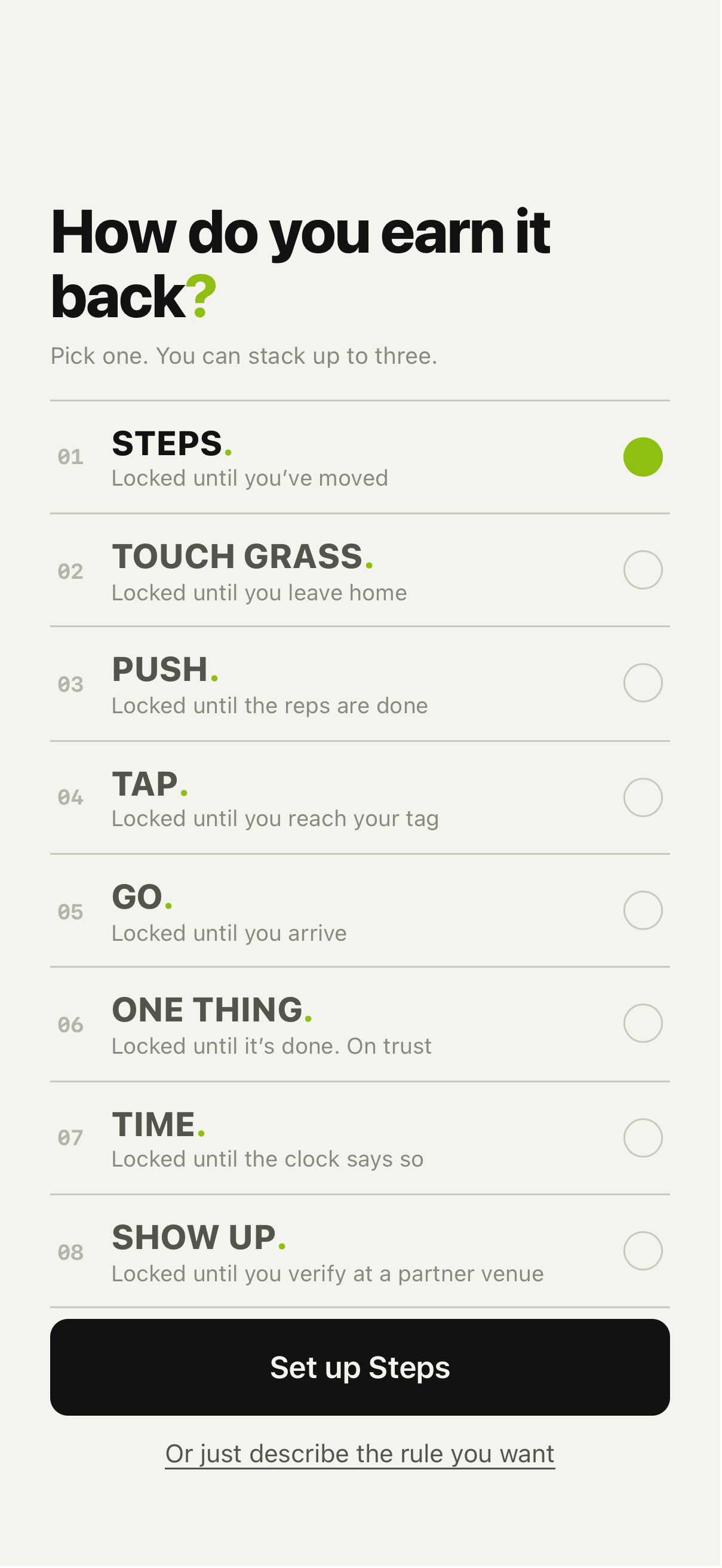
A wall around work, too.
Staff pick what waits and how to earn it back — and that includes work apps. Outlook, Gmail, Teams, Slack, whatever your stack is. A Time rule holding email and chat until 9 is the setting we expect to see most.
It blocks Slack too
NOT YET is not only a social-media blocker. Staff choose what waits — Instagram, TikTok, or Outlook, Slack and Teams — and set a Time rule so work apps stay shut until 9. It is the rare wellbeing benefit that protects people from their employer's own tools, which is precisely why they trust it.
Sponsored access as part of your wellbeing offer. Voluntary, always — an unenrolled employee is indistinguishable from an enrolled one.
Optional promotion for eligible employee-paid Individual subscriptions, with 25% of defined net proceeds under the applicable partner agreement. Eligibility and payment are verified first. Employer-funded seats carry no revenue share.
What HR never sees
That the programme exists and, above a minimum cohort, how many people are using it.
Never who is enrolled, which apps anyone blocks, when they unlock, whether they completed anything, or any individual behavioural report. Ever. This is the condition of the product working at all.
Younger staff are not asking for a fruit bowl.
The people you are trying to hire and keep have watched an older generation lose their evenings to a phone, and they are not signing up for it. Protected time, a boundary between work and the rest of life, and an employer who treats attention as something worth defending — those are the things being asked about in interviews now.
Most benefits signal that a company will spend money on you. This one signals something harder to fake: that it thinks your time and your head are yours. That is a difficult thing to say in a values deck and an easy thing to demonstrate by paying for it.